
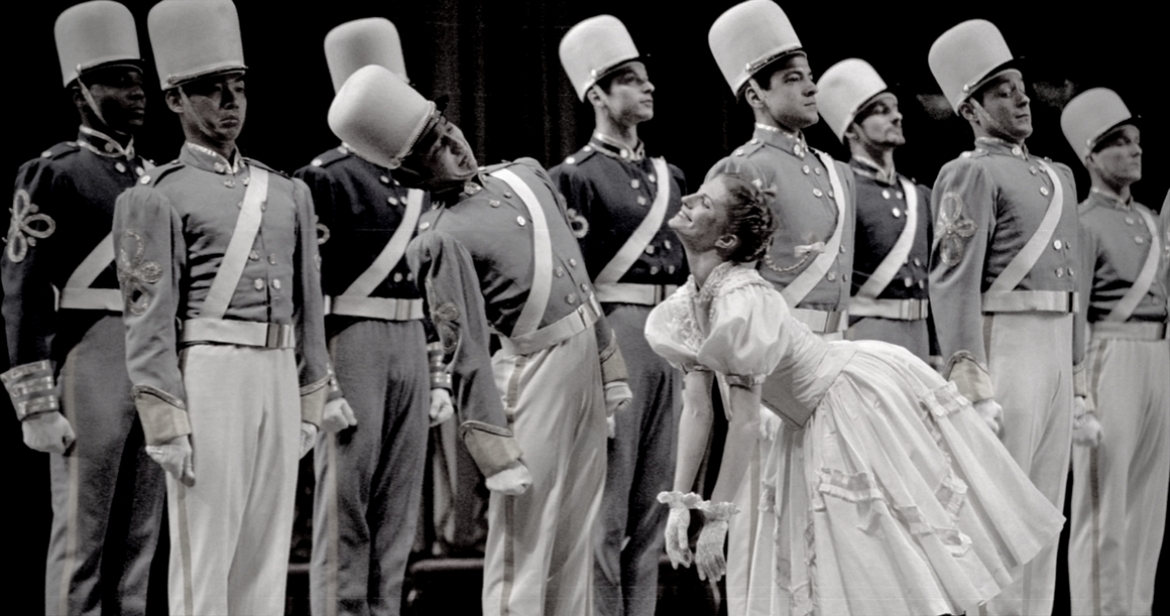
IL BALLO DEI CADETTI
Coreografia e balletto: David Lichine
Musica: Johann Strauss
Prima Rappresentazione: Sydney, Theatre Royal, Original Ballet Russe 1940
Come in tutte le accademie militari ed educandati signorili femminili di alto borgo, usualmente un tempo come ancora oggi si organizzavano gran balli in occasione del debutto in società che una volta si soleva celebrare tra la nobiltà. Questo balletto mette in scena proprio uno degli incontri tra i cadetti dell’accademia militare viennese e le educande di un istituto femminile di prestigio della medesima città in occasione di un gran ballo di fine anno. Quest’ultimo viene organizzato dall’Istituto di educazione nobiliare femminile viennese per celebrare il termine del percorso di studi delle fanciulle licenziande. I cadetti si presentano in parata, guidati dal Generale e vengono accolti con gran cerimoniale dalle fanciulle, coordinate dalla Direttrice (ruolo svolto da un uomo). La serata ha inizio: la danza del tamburino è la prima a dar spettacolo, segue l’imitazione del pas de deux del La Sylphide, poi una variazione di un’allieva più piccola. Si diffonde un clima di ironia, comicità, allegria che pervade tutti i partecipanti dal Generale alla Direttrice, le ragazze si sfidano a colpi di fouettes per primeggiare e attirare l’attenzione dei cadetti, a quanto pare a nulla sono valse le lezioni di buone maniere e le esibizioni successive lo dimostrano senza ombra di dubbio. Non poteva mancare l’elemento amoroso tra adolescenti, sentimento caratterizzante quest’età, infatti alla fine del ballo due giovani si incontrano in una danza finale e si innamorano, si piacciono, si cercano, tentano un incontro furtivo, ma ben presto vengono interrotti dal richiamo del Generale e della Direttrice che mettono in riga i cadetti per ritornare in accademia e le giovani fanciulle per rientrare nelle loro stanze. La Direttrice dell’Istituto non perde occasione di punire le più disobbedienti allieve con una tirata di orecchie ordinando loro di ritirarsi immediatamente. Un balletto fortemente ironico e comico che deve il proprio successo proprio a tale caratteristica.




Beirut, Lebanon
CNN
—
A deadly Israeli airstrike on Hezbollah’s stronghold in southern Beirut on Friday has left over a dozen people dead, including a high-ranking Hezbollah commander, sharply escalating the conflict between the two sides and raising fears of all-out war.
[url=https://gl-kra9.cc]kra6.gl[/url]
Senior Hezbollah commander Ibrahim Aqil, part of Hezbollah’s elite Radwan Force, was assassinated along with “about 10” other commanders, Israel Defense Forces (IDF) spokesperson Daniel Hagari said, accusing them of planning to raid and occupy communities in Galilee in northern Israel.
Hezbollah confirmed Aqil’s death on Friday, saying he was killed “following a treacherous Israeli assassination operation on 09/20/2024 in the southern suburbs of Beirut.”
According to Hagari, the targeted commanders were “underground underneath a residential building in the heart of the Dahiyeh neighborhood, using civilians as a human shield” at the time of the attack.
Lebanon’s health ministry said at least 14 people were killed and 66 others injured in the airstrike, which leveled a multistory building in a densely populated neighborhood.
Aqil had a $7 million bounty on his head from the United States for his suspected involvement in the 1983 strike on the US Embassy in Beirut, which killed 63 people, as well as the bombing of the Beirut Marine barracks, which killed 241 US personnel later that year.
A CNN team on the ground in Beirut saw a frantic effort to rescue people from underneath the rubble and rush the wounded to hospital. Witnesses said nearby buildings shook for nearly half an hour after the strike, which the IDF said it had carried out at around 4 p.m. local time.
2kk.cx
https://kra2gl.cc
A week of surprise attacks
Friday’s strike marked the fourth consecutive day of surprise attacks on Beirut and other sites across the country, even as Israeli forces continued deadly strikes and operations in Gaza and the occupied West Bank.
The first major attack against Hezbollah this week came Tuesday afternoon when pagers belonging to the militant groups’ members exploded near-simultaneously. The pagers had been used by Hezbollah to communicate after the group’s leader, Hassan Nasrallah, encouraged members to switch to low-tech devices to prevent more of them from being assassinated.
Almost exactly 24 hours later, Lebanon was rocked by a second wave of explosions, after Hezbollah walkie-talkies detonated in Beirut and the south of the country on Wednesday.
At least 37 people were killed, including some children, and more than 3,000 were injured in the twin attacks.
In a United Nations Security Council meeting on Friday, UN human rights chief Volker Turk on Friday warned that the detonation of communication devices could violate international human rights law.
Lebanese Foreign Minister Abdallah Bou Habib and Israeli Ambassador to the UN Danny Danon clashed at the heated meeting, with Bou Habib calling on the council to condemn Israel’s actions and Danon slamming the Lebanese envoy for not mentioning Hezbollah.
kra6.gl
https://gl-kra10.cc